“What Is This Jewellery?A Guide to Traditional Bengali Silver Ornaments!”

If you have ever heard about Kanbala, Kankan, Noa, Kamar Bicha, Tikli or Jhumka– Bengali jewellery has a wonderfully rich vocabulary alongwith their own names, shapes and ways of wearing them, and some of these names are still familiar in Bengali households today. As jewellery styles change, some of these traditional names are becoming less familiar to younger generations. We have made these names easier to understand. From earrings and bangles to necklaces, forehead ornaments and anklets, let’s explore the traditional jewellery forms associated with Bengal and look at how they continue to inspire jewellery today—particularly the growing world of SILVER JEWELLERY.

Understanding the Jewellery of Bengal:

Traditional Bengali jewellery includes elaborate bridal ornaments, everyday bangles, distinctive earrings, necklaces, waist ornaments and jewellery worn on the feet or forehead. Many of these forms can be seen today in traditional silver jewellery, where familiar Bengali shapes and motifs are interpreted for contemporary wear. That diversity is part of what makes Bengali jewellery so interesting. For today’s jewellery wearer, silver jewellery offers an accessible way to explore these traditional forms while bringing them into everyday styling. The material may be familiar, but the story behind the design can be centuries old.

Kanbala

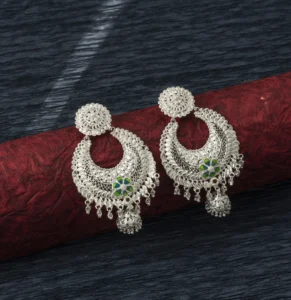
  • Kanbala is a traditional style of earring found in Bengali jewellery collections.
  • Different designs can feature floral motifs, decorative surfaces, hanging elements or other intricate details.
  • Today, Kanbala-inspired earrings can range from elaborate traditional pieces to lighter designs suitable for contemporary wear.
  • Silver jewellery versions of Kanbala allow the traditional form to be appreciated beyond bridal occasions, making it possible to wear a distinctly Bengali-inspired earring with sarees, ethnic outfits or even simpler contemporary looks.
  •  The term is commonly used by jewellery makers and retailers for this distinctive earring form, and Kanbala continues to find its place within contemporary silver jewellery collections.

Chutki

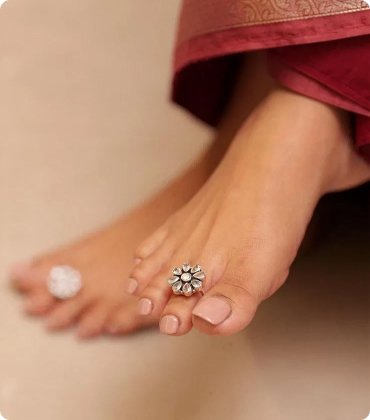
  • Chutki is traditionally used for a toe ring in Bengali jewellery terminology.
  • It is a small ornament, but like many traditional pieces, its significance comes from the wider customs surrounding jewellery and dressing.
  • Toe rings have a strong association with silver jewellery traditions in India.
  • Their relatively small size also makes them a practical example of how everyday adornment can carry cultural meaning.
  • A simple silver Chutki may look understated, but understanding its traditional identity gives the piece a deeper context.

Kamar Chaabi

  • Kamar Chaabi refers to a traditional waist ornament or waist chain.
  • Similar waist ornaments appear under different names across Indian jewellery traditions.
  • These pieces can be delicate and elaborate, and are particularly associated with traditional and festive dressing.
  • Today, silver jewellery inspired by the Kamar chaabi can reinterpret the traditional waist ornament in ways that suit contemporary festive styling.
  • Rather than treating a waist chain simply as an accessory, understanding the term Kamar chabi helps us recognise the Bengali design tradition behind it.

Noa

  • Noa, also known as Loha or Loha Badhano in certain Bengali traditions, is a traditional bangle associated particularly with Bengali married women. 
  • The classic form is associated with an iron bangle, sometimes combined with or covered by gold.
  • The design has also evolved over time, with contemporary versions available in different styles.
  • It is important to note that Noa is traditionally a specific cultural ornament and should not simply be treated as another name for a silver bangle or silver jewellery.
  • Understanding this distinction helps us appreciate Bengali jewellery traditions accurately rather than grouping every bangle under the same category.

Kankan

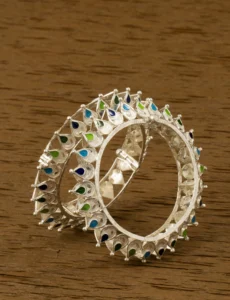
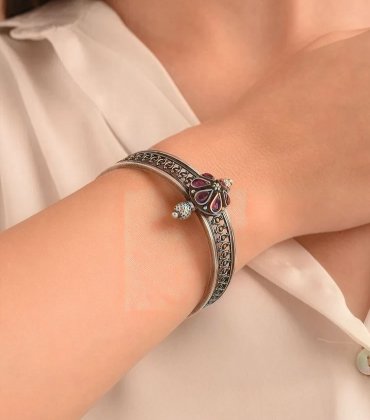
  • Kankan is a traditional type of bangle.
  • Its designs can vary considerably, from relatively simple forms to more decorative versions.
  • For modern jewellery lovers, Kankan-inspired designs offer an easy way to bring a traditional Bengali element into everyday styling.
  • Silver jewellery interpretations of Kankan can retain the character of the traditional bangle while offering a versatile option for daily wear.
  • A Kankan can be worn on its own for a more understated look or combined with other silver jewellery pieces for a layered traditional appearance.

Mukta Haar

  • Mukta Haar literally refers to a necklace made with pearls.
  • The word Mukta relates to pearls, while Haar refers to a necklace or garland.
  • Pearl necklaces can be styled on their own or combined with other jewellery, making this form particularly versatile for festive and occasion wear.
  • Contemporary necklace designs can also borrow the structure and visual character of the Mukta Haar while incorporating silver jewellery elements.
  • This demonstrates how traditional Bengali jewellery vocabulary can continue to influence modern jewellery without requiring every contemporary piece to reproduce an older design exactly.

Tikli

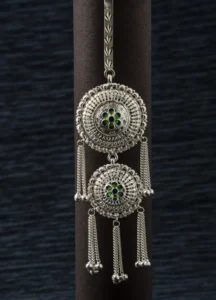
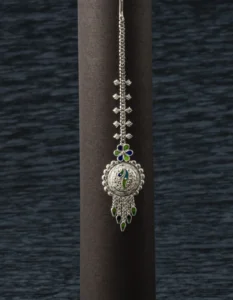
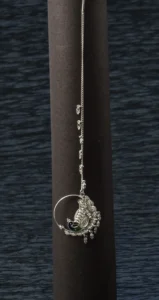
  • Tikli is a traditional forehead ornament, generally worn along the hair parting.
  • It is particularly associated with bridal and festive jewellery.
  • A Tikli can be a relatively simple ornament or an elaborate piece designed to coordinate with the rest of a traditional jewellery set.
  • Contemporary silver jewellery can reinterpret this traditional forehead ornament in lighter and more understated forms.
  • Worn alongside earrings, necklaces or other traditional pieces, a silver Tikli-inspired design can contribute to a distinctly Bengali festive look.

Bengali Choker

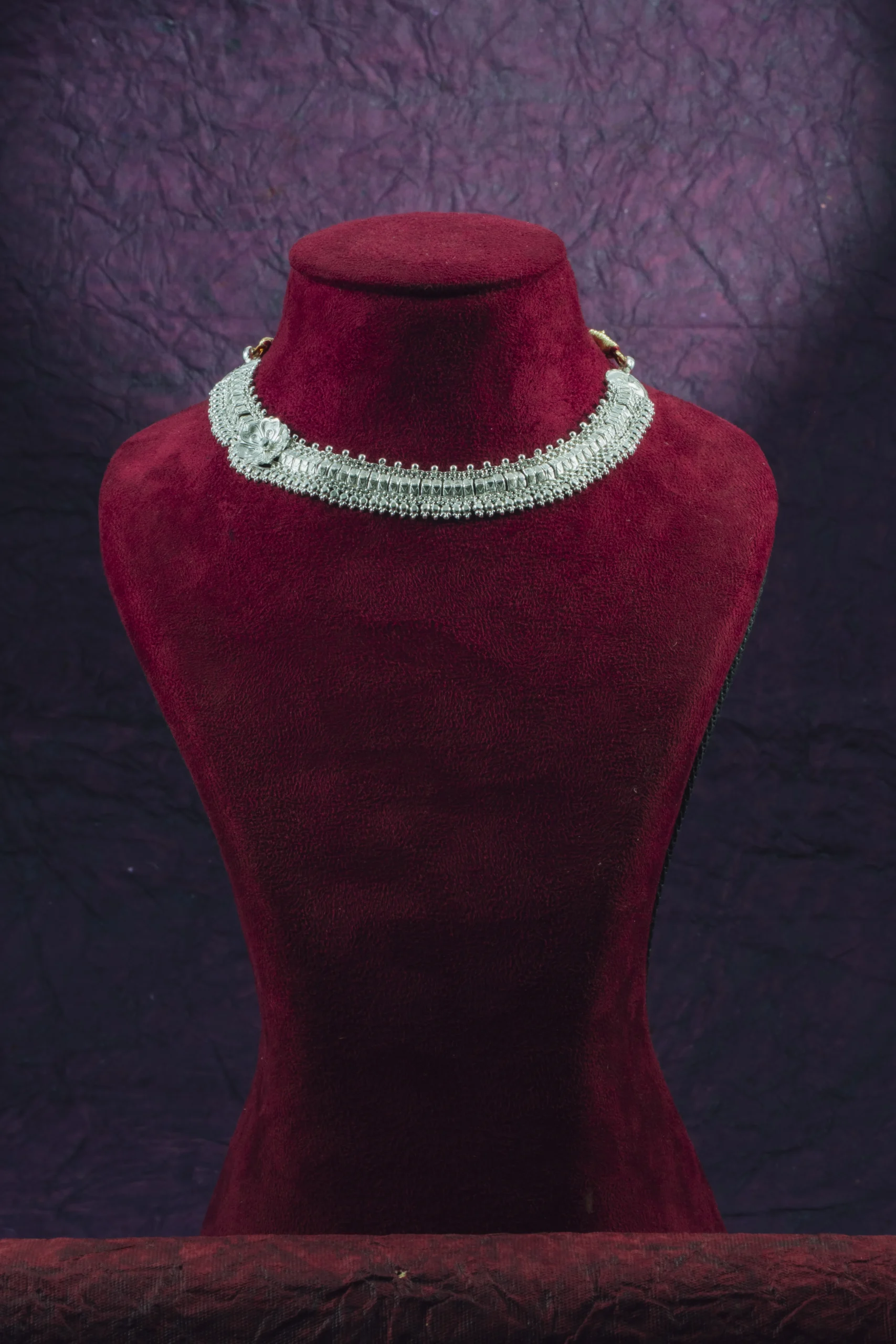
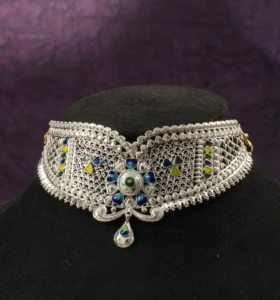
  • A choker is a short necklace worn closely around the neck.
  • Bengali jewellery collections include many traditional and contemporary choker-style designs.
  • The Bengali chik is also described as a collar-like necklace worn around the neck, showing how closely related forms can have different names.
  • Today, the choker remains one of the most adaptable forms of silver jewellery.
  • A traditional Bengali-inspired silver choker can be paired with a saree for a classic look or styled with contemporary Indian clothing for a more modern interpretation.

Bengali Bala

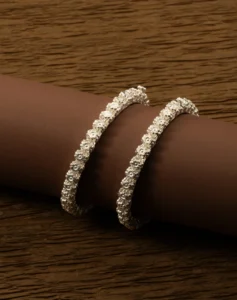
  • Bala is a traditional bangle form that has a strong presence in Bengali jewellery.
  • Designs can range from simple rounded bangles to more detailed pieces with decorative motifs.
  • Today, bala-inspired designs remain popular because they can retain a traditional character while being adapted for contemporary styling.
  • As a form of silver jewellery, the Bala works particularly well for everyday wear.
  • Its rounded silhouette can remain simple and understated, or decorative details can be introduced to create a more traditional statement.
  • Multiple silver bangles can also be worn together to create a layered look.

Payal

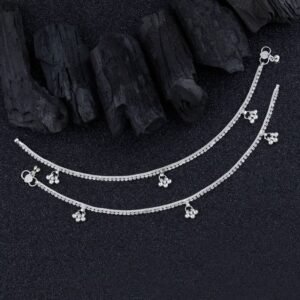
  • Payal is a commonly used Indian term for an anklet.
  • In Bengali terminology, Nupur is another traditional name associated with anklets, particularly those featuring small bells that create a soft jingling sound.
  • Silver jewellery has traditionally been particularly popular for anklets and other foot ornaments.
  • This makes Payal and Nupur important examples of how silver has been connected with Indian adornment and everyday jewellery traditions.
  • Even today, silver anklets remain a familiar part of silver jewellery collections, with designs ranging from delicate everyday chains to more traditional bell-adorned forms.

Jhumka

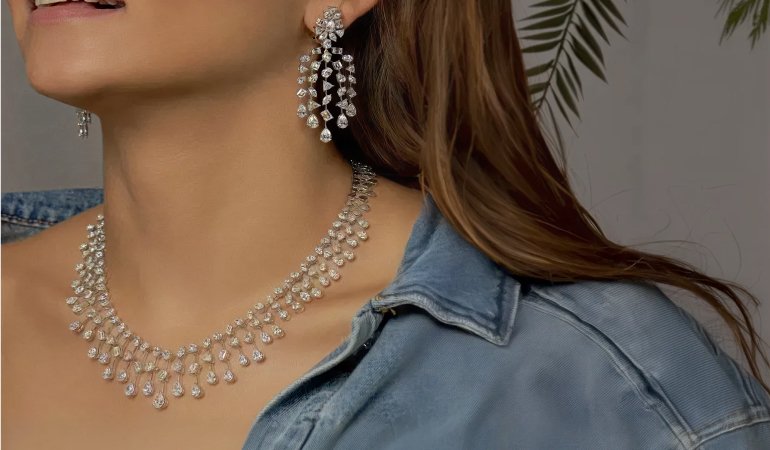
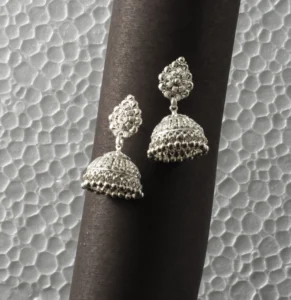
  • Perhaps one of the most recognisable traditional Indian earrings, the Jhumka is known for its characteristic bell-like form.
  • In Bengali jewellery terminology, Jhumko is described as a bell-shaped or bell-like earring, with many variations including flower-inspired and other decorative forms.
  • Today, jhumkas remain equally at home with a traditional saree, festive outfit or a much simpler everyday look.
  • Silver jewellery versions of the Jhumka make this recognisable form especially versatile, combining traditional detailing with a contemporary approach to everyday dressing.
  • For many jewellery lovers, a silver Jhumka can be an easy starting point for exploring traditional Indian and Bengali-inspired silver jewellery.

Noserings

  • Nose ornaments are another important part of traditional Bengali dressing.
  • Different forms exist, including Nolok, a septum ornament, and larger nose rings that may be connected to the hair with a chain.
  • Modern nosepins are generally much smaller and easier to wear, allowing this traditional element to be incorporated into contemporary jewellery styling.


These Names Matter Because:

Knowing the name of an ornament changes the way we look at it. A pair of earrings becomes more interesting when you know it is a Kanbala. A bangle becomes more meaningful when you understand the difference between a Bala and a Kankan. A small forehead ornament is no longer simply a decorative accessory when you discover the tradition behind a Tikli. The same is true of silver jewellery. A silver bangle, earring, anklet or necklace becomes more meaningful when we understand the traditional form that inspired it. A piece of silver jewellery is therefore not simply about its material or appearance. Its design can carry a name, a regional connection, a method of wearing and a story passed between generations. Names preserve knowledge. They help us understand where a design comes from, how it is traditionally worn and how it has changed over time.

Traditional Jewellery,Reimagined for Today:

Silver jewellery provides a natural space for this evolution, allowing traditional Bengali-inspired forms to become part of contemporary wardrobes. A traditional jhumka can become an everyday silver earring. A Bala can be paired with contemporary silver bracelets. A classic necklace form can be redesigned as wearable silver jewellery for modern outfits. A traditional waist ornament can inspire a more understated silver waist chain for festive occasions. The shape may change, the weight may change and the way it is worn may change—but the inspiration remains. This is where traditional Bengali jewellery and contemporary silver jewellery meet: one carries the heritage, while the other gives that heritage room to fit into modern life.


Discovering the Stories Behind Bengali Jewellery:

At THE HOUSE OF SHILPO, we believe that understanding jewellery makes wearing it more meaningful. Through our “What Is This Jewellery?” series, we explore traditional Bengali ornaments one at a time—what their names mean, how they are traditionally worn, what makes their designs distinctive and how they continue to inspire contemporary jewellery and silver jewellery. For us, silver jewellery is not simply a category of products. It can also be a way of keeping traditional forms visible, wearable and relevant to a new generation. Because sometimes, the most interesting thing about a piece of jewellery is not just how it looks, but what it is called and the story behind that name. Explore the series and discover the jewellery of Bengal, one ornament at a time.
Bengali Silver Jewellery:History, Heritage & Traditional Designs!

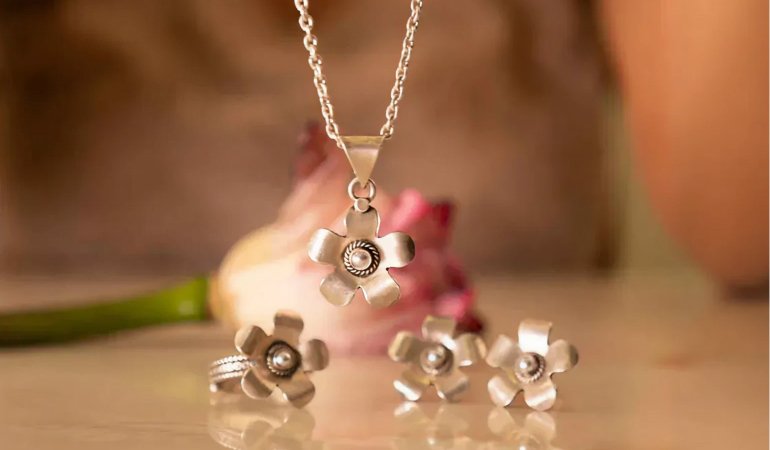
“Bengali silver jewellery reflects the rich artistic heritage of Bengali culture, combining traditional craftsmanship, distinctive silver jewellery design, and a strong sense of identity. From elegant Bengali jhumkas and handmade silver bangles to contemporary interpretations, these timeless ornaments continue to find a place in modern wardrobes. Jewellery has always held an important place in Bengali life, worn during weddings, festivals, and everyday celebrations. Although gold is strongly associated with ceremonial adornments, silver has played an equally vital role in the region’s metalworking traditions. Bengal is particularly known for its intricate handcrafted silver jewellery, including silver filigree jewellery and a wide variety of traditional Bengali ornaments”.

What Makes Bengali Jewellery Unique:

  • One of the most fascinating aspects of Bengali jewellery is its variety. Traditional forms include familiar designs such as the jhumka, kaanbala, bala, churi, kankan, hansuli, baju and anklets, representing classic examples of Indian ethnic jewellery. Their shapes, proportions, and detailing can vary across different traditions and regions. The beauty often lies in the craftsmanship. Engraved surfaces, textured patterns, delicate detailing and carefully shaped metal give these ornaments their distinctive character. Bengal’s silver filigree tradition is another prime example of artisan silver jewellery. Fine silver wires are carefully worked into intricate patterns, creating authentic silver jewellery where the artistry is as important as the material itself.

Why Has Silver Remained Popular:

  • Silver offers a unique combination of versatility, shine and workability. It can be shaped into traditional forms while allowing artisans to create detailed textures and patterns. It also works naturally with different styles of dressing. A traditional jhumka can complement a saree during a festive occasion, while a simpler pair of silver earrings can become part of everyday wear. Similarly, traditional bala and churi designs can be styled with both ethnic and contemporary clothing. This ability to move between tradition and everyday fashion is one reason these designs continue to appeal to modern customers.

From Traditional Ornaments to Modern Designs:

  • Jewellery traditions are never completely static. They evolve with changing lifestyles, fashion and the preferences of each generation. Traditional Bengali ornaments were often elaborate and closely associated with ceremonies and special occasions. Today, many customers look for pieces that are lighter, versatile and easier to wear regularly. Modern interpretations therefore take inspiration from established forms while adapting their size, shape and detailing for contemporary lifestyles. The legacy of traditional Bengali designs remains visible in the design language—the familiar silhouette of a jhumka, the character of a traditional bala, the curved form of a hansuli, or the intricate detailing of handcrafted heritage jewellery. Tradition does not have to remain unchanged to remain meaningful.

Keeping the Heritage Alive:

  • Some traditional jewellery forms are becoming less familiar as everyday fashion changes. Yet their distinctive designs continue to inspire contemporary jewellery makers and wearers. For us, this is what makes the jewellery heritage of Bengal particularly meaningful. At THE HOUSE OF SHILPO, we are inspired by the traditional forms, craftsmanship, and artistic details that have shaped Bengali jewellery over generations. Our approach is to bring these influences into pieces that feel relevant to the modern wearer—jewellery that can be appreciated for its design, craftsmanship, and deep connection to Bengal. Because jewellery can be more than something we wear. It can carry a story, represent a tradition and create a connection between generations. And that is what makes these timeless designs worth wearing today: they allow a little piece of Bengal’s heritage to live on in the present.

“A Day Inside a Bengali Silver Jewellery Workshop|The Making!”

  • What happens inside a traditional Bengali silver jewellery workshop:

Behind every finished piece of silver jewellery is a sequence of design, melting, shaping, detailing, joining and finishing.Unlike factory-made accessories that can follow highly standardised processes, traditional Bengali silver jewellery often depends heavily on the hands, judgement and experience of the artisan.Bengal has a documented heritage of silver craftsmanship, including filigree, engraving, repoussé and other forms of metalworking.

  • The journey begins before the silver reaches the workbench
    • An artisan first needs to understand what is being made: a silver jewellery bangle, earring, necklace, anklet, waist ornament or another traditional form.
    • Traditional Bengali designs can contain distinctive elements such as floral patterns, geometric details, mythical forms and nature-inspired motifs.
    • This is particularly important when making heritage-inspired silver jewellery, because the proportions and decorative details can determine whether the finished piece still feels connected to its traditional form.
  • Step 1: Preparing the silver
    • The process begins with silver being prepared for fabrication.
    • Depending on the type of silver jewellery being made, the metal may be melted, formed into sheets, drawn into wire or prepared in another suitable form.
    • Government documentation on Indian silver jewellery describes processes including melting, casting, carving, cutting and forging, while Bengal’s silver craft traditions also involve specialised shaping and finishing techniques. 
  • Step 2: Turning silver into workable material
    • Silver has to be brought into a form that an artisan can manipulate accurately.
    • For certain traditional silver jewellery designs, sheets may be hammered and shaped; for filigree work, silver is drawn into extremely fine wires.
    • The artisan’s control over thickness, softness and shape becomes particularly important when the final silver jewellery requires delicate detailing.
  • Step 3: Shaping the basic form
    • At this stage, the workshop starts to look less like a raw-material space and more like a silver jewellery workshop.
    • A flat sheet can gradually become the body of a bangle, earring, pendant or other ornament through cutting, bending, hammering and forming.
    • The artisan is constantly checking dimensions because even a small difference can affect the symmetry and wearability of the finished silver jewellery.
  • Step 4: The tools do the work—but the artisan controls the tools
    • Traditional silver artisans work with tools such as hammers, cutters, pliers, tweezers, punches and other specialised implements.
    • These tools may appear simple, but producing detailed silver jewellery requires considerable control over pressure, angle and movement.
    • Bengal’s craft documentation specifically records techniques such as engraving, etching, embossing and repoussé among the metalworking skills used in the region.
  • Step 5: Creating the details
    • This is where a basic piece of silver starts becoming recognisable silver jewellery.
    • Decorative patterns may be engraved, chased, embossed or added through other techniques depending on the design.
    • In traditional Bengali silver jewellery, details are not merely surface decoration; they can be what gives a Kanbala, Bala, Kankan, Jhumka or other ornament its visual identity.
  • Step 6: Filigree—when silver becomes almost like a thread
    • Filigree is one of the particularly distinctive techniques associated with Bengal’s metal craft heritage.
    • The artisan works with very fine silver wire, shaping it into curls, spirals and other patterns before carefully joining the elements together.
    • The result can be an intricate, lace-like structure that gives silver jewellery an unusually delicate appearance. Bengal’s filigree tradition is documented particularly in the South 24 Parganas region.
  • Step 7: Repoussé and raised patterns
    • Another traditional technique involves creating raised designs by working the metal from the reverse side.
    • This type of controlled hammering can produce a three-dimensional effect across a silver surface.
    • For silver jewellery, techniques of this kind allow an artisan to create depth and texture without depending entirely on added stones or embellishments. 
  • Step 8: Joining the individual parts
  • Many pieces of silver jewellery are not created as one continuous object.
  • Separate components may need to be joined carefully to create the final earring, bangle, chain, pendant or ornament.
  • At this point, alignment becomes critical: poorly positioned components can affect both the appearance and functionality of the finished silver jewellery.
  • Step 9: Smoothing and finishing
    • Once the main construction is complete, the artisan works on the surface and edges of the silver jewellery.
    • Uneven areas are refined, unwanted marks are removed and the piece is prepared for its final finish.
    • In traditional silver craft, hand polishing and finishing remain important parts of the process.
  • Step 10: The final inspection
    • Before a piece of silver jewellery leaves the workshop, the artisan needs to examine more than its appearance.
    • The design, joins, symmetry, surface finish and overall construction all need to work together.
    • For wearable silver jewellery, comfort and practicality matter just as much as decorative detail.
  • Why Handmade Silver Jewellery Is Not Always Identical:

  • Handcrafted silver jewellery naturally carries small variations.
    • Two pieces made from the same design may have tiny differences in curves, engraving, texture or finishing.
    • These variations are not necessarily defects; they can be evidence of the human craftsmanship involved in creating the silver jewellery.
  • Traditional craftsmanship depends on judgement, not only instructions.
    • An experienced artisan learns to judge how much pressure to apply, when the silver needs further shaping and how much detailing the material can take.
    • These decisions can influence the final character of handcrafted silver jewellery.
  • The same design can therefore feel slightly different from piece to piece.
    • This is one of the distinguishing characteristics of handcrafted silver jewellery compared with completely standardised mass production.
    • The design remains recognisable, but the artisan’s hand gives each piece its own subtle character. Contemporary discussions of Kolkata’s handcrafted jewellery similarly highlight these small variations as part of handmade craftsmanship. 
  • What Makes Bengali Silver Jewellery Craftsmanship Special?
  • It connects design with regional heritage.
    • Bengali silver jewellery is not simply about working a precious metal into attractive shapes.
    • The region has developed distinctive jewellery forms and metalworking traditions, including silver filigree and traditional Bala and earring forms. 
  • It combines precision with patience.
    • Fine silver jewellery detailing cannot always be rushed.
    • Whether an artisan is drawing fine wire for filigree or creating a pattern through engraving, the final appearance depends on numerous small decisions.
  • Traditional techniques can still work with contemporary designs.
    • Today’s silver jewellery does not have to reproduce an old ornament exactly.
    • Traditional Bengali forms can be simplified, resized or reinterpreted while retaining recognizable elements of their original design language.
    • This evolution is already visible in the demand for lighter ornaments with fine craftsmanship and traditional influences. 
  • From Artisan’s Workbench to Your Silver Jewellery Box
  • A finished piece of silver jewellery represents more than its final appearance.
    • By the time a Bengali silver jewellery piece reaches the wearer, it may have passed through multiple stages of preparation, shaping, detailing and finishing.
    • What looks like a simple bangle or earring can therefore contain considerable manual work.
  • This is why knowing the making process changes how we see silver jewellery.
    • A Kanbala is not simply an earring.
    • A Bala is not simply a bangle.
    • A traditional Jhumka is not simply a bell-shaped ornament.
    • When these forms are handcrafted in silver, the material, design tradition and artisan’s skill come together to create silver jewellery with a distinct Bengali character.
  • Why Should You Care About the Artisan Behind Your Silver Jewellery:

  • Because craftsmanship is part of the product.
    • When buying silver jewellery, customers often focus on design, weight, purity and price.
    • Those factors matter, but craftsmanship also determines how successfully traditional details have been translated into the finished piece.
  • Because traditional skills need continuity.
    • Bengal’s silver craft heritage includes communities and clusters where knowledge has been passed between generations of artisans. Supporting thoughtfully made silver jewellery helps keep attention on the skills behind traditional ornament-making.
  • Because every traditional design has a story.
    • Understanding how silver jewellery is made makes it easier to appreciate why certain Bengali ornaments look the way they do and why their details matter.
  • The Hands Behind Bengali Silver Jewellery:

  • Every finished piece of silver jewellery has a process behind it.
  • Every traditional Bengali design has a vocabulary behind it.
  • And behind every handcrafted piece is an artisan whose experience determines how successfully an idea becomes an ornament.
  • At THE HOUSE OF SHILPO, this is the part of silver jewellery we believe deserves to be understood—not just the finished product, but the craft, patience and traditional knowledge that make the finished piece possible.
  • Because when you understand how Bengali silver jewellery is made, you begin to see the difference between simply wearing an ornament and wearing a piece of craftsmanship.


Stay Connected, Stay Inspired

Discover our latest silver jewellery collections, exclusive designs, and timeless pieces.
Subscribe for style inspiration, updates, and special offers delivered to your inbox.

Connect Globally